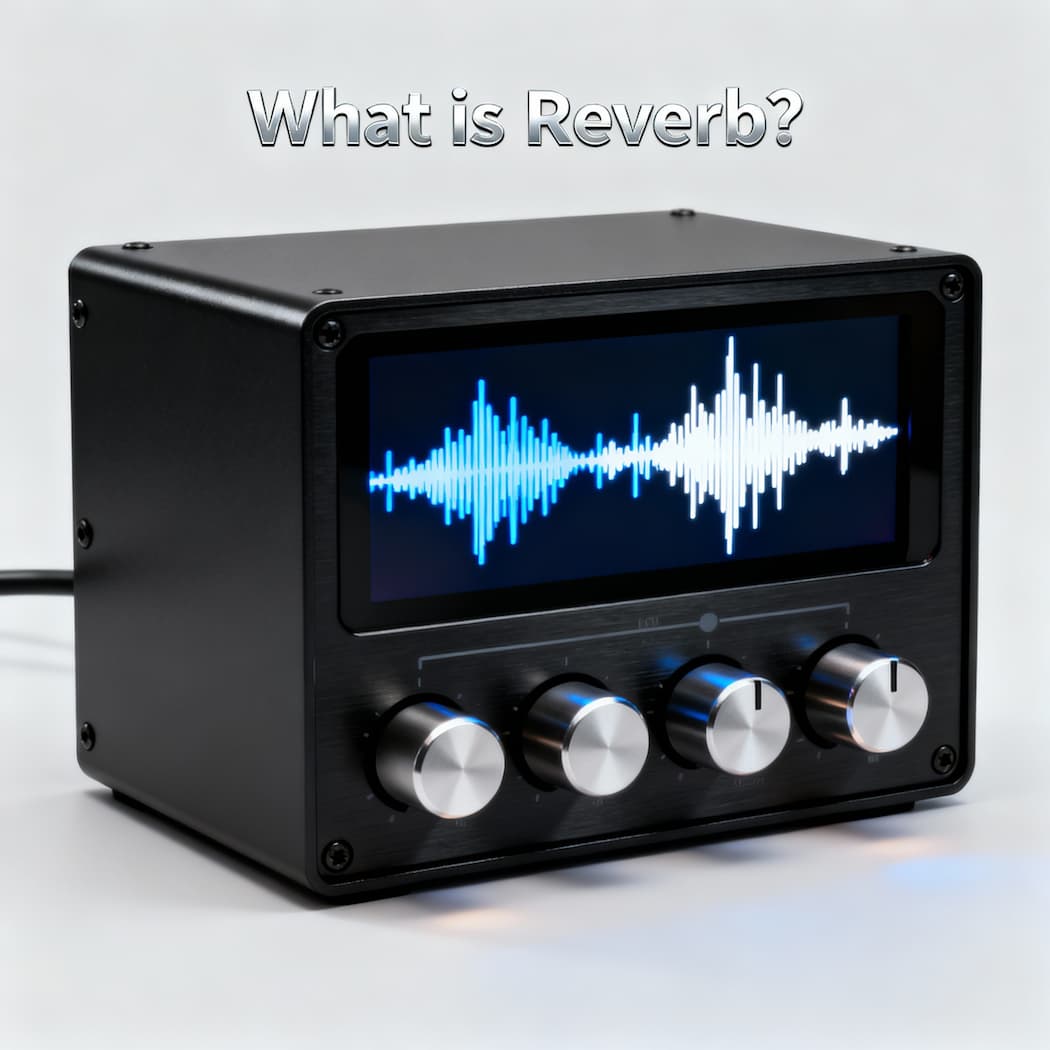
Reverb, short for reverberation, is the natural echo and space that sound creates when it reflects off surfaces in a room or environment. Imagine clapping in a large hall — the sound doesn’t stop immediately; it bounces around and slowly fades away. This lingering effect is what we call reverb.
Why Reverb is Important in Music
- Adds depth and space to recordings
- Creates a natural, ambient atmosphere
- Helps blend vocals and instruments smoothly
- Enhances the emotional feel of a track
Without reverb, music often sounds flat and unnatural.
How Does Reverb Work?
Sound waves travel in all directions and reflect off walls, floors, and ceilings. These reflections reach your ears milliseconds after the original sound, creating a continuous echo we perceive as reverb. The sound characteristics change based on room size, shape, and materials.
Key Reverb Parameters and Their Effects
Pre-Delay
The time between the original sound and the first reflection. Longer pre-delay simulates bigger spaces and creates a sense of distance.
Decay Time (Reverb Time)
How long the reverb lasts before fading. Larger spaces have longer decay times; smaller rooms have shorter decay.
Early Reflections
The first set of echoes after the sound, offering cues about the room’s size and shape.
Diffusion
Controls how smooth or dense the reverb sounds. High diffusion creates a thick reverb tail; low diffusion sounds more sparse.
Wet/Dry Mix
Adjusts the balance between the original dry sound and the reverberated wet sound.
Damping
Reduces high frequencies over time, making reverb warmer and less harsh.
Types of Reverb
- Room Reverb: Small to medium spaces for intimate sounds
- Hall Reverb: Large concert halls with long decay times
- Plate Reverb: Uses metal plates for smooth and lush sounds
- Spring Reverb: Vintage effect using springs in hardware
- Digital Reverb: Algorithm-based, highly customizable options
Simple Analogy
Reverb is like how light fills a room — sound bounces similarly, creating a sonic environment around you.
Practice Exercise for Music Producers
1. Use a dry vocal or guitar track.
2. Apply a reverb plugin on your DAW.
3. Experiment with pre-delay to feel spatial distance.
4. Adjust decay time to change room size perception.
5. Play with diffusion and damping to shape texture and warmth.
6. Find the right balance of wet/dry mix for your track.
Reverb adds a magical sense of space and emotion to music. Learning how to control reverb basics can dramatically improve your mixes and productions.